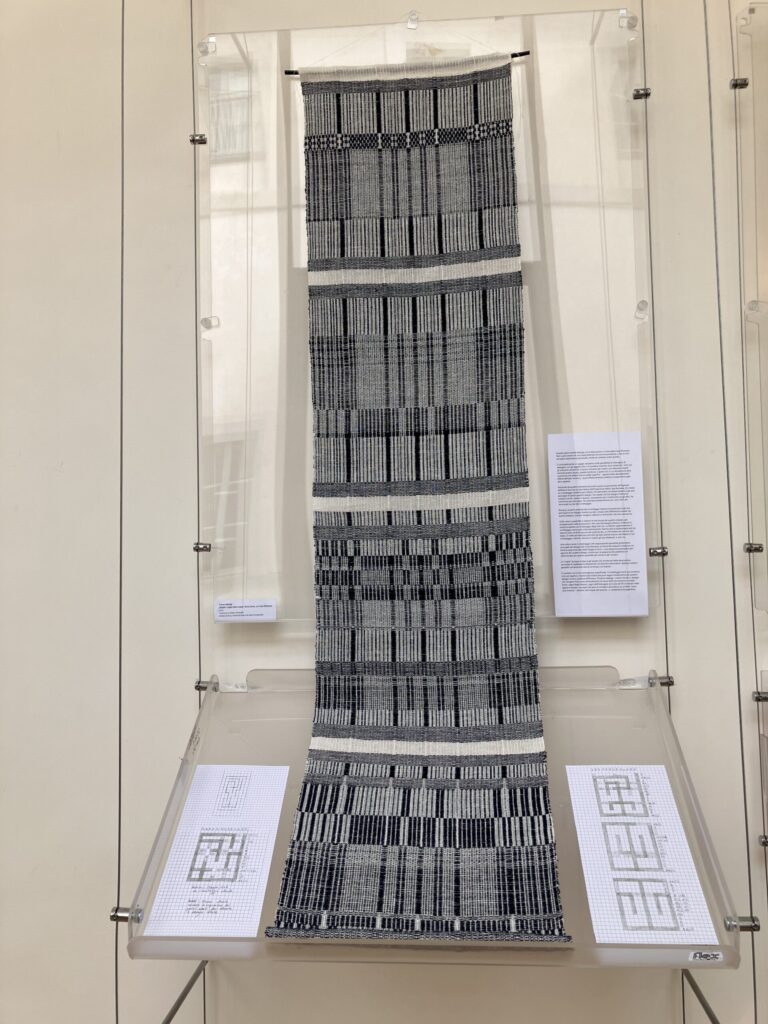
Modern weaving is tied to cotton. However, the history of cotton is inseparable from the history of human slavery, imperialism, and ongoing environmental exploitation. Even if we speak only of current cotton production and the environment, it is damaging enough. From cultivation to processing, modern cotton radically depletes water supplies, while polluting the soil with pesticides and chemical dyes. Thus for historical and environmental reasons I do not use cotton, except re-uses from rewound fabrics.
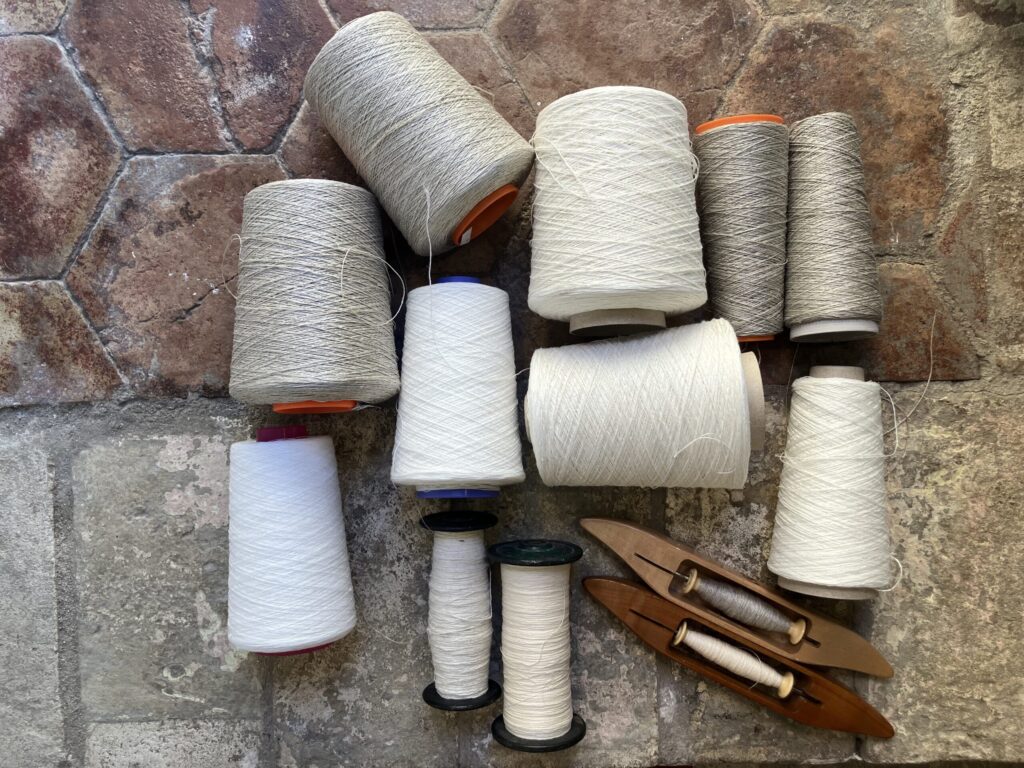
Linen and hemp are my substitutes. Employed since ancient times, these fibers are currently less readily available, more expensive, and more difficult to weave than cotton. But they have a cleaner past and they require much less water and energy to cultivate and process. Linen uses only about 40% of the water employed in cotton cultivation, and much less energy; hemp has an overall water footprint that is 60% lower than cotton.
Along with these two ancient fibers, Tencel is my other structural yarn. It is made with a patented process from sustainably sourced eucalytus wood pulp. The fibers are processed with enzymes and water that are continually re-used—99% of them are captured. Tencel has one of the lowest environmental impacts of any fiber.
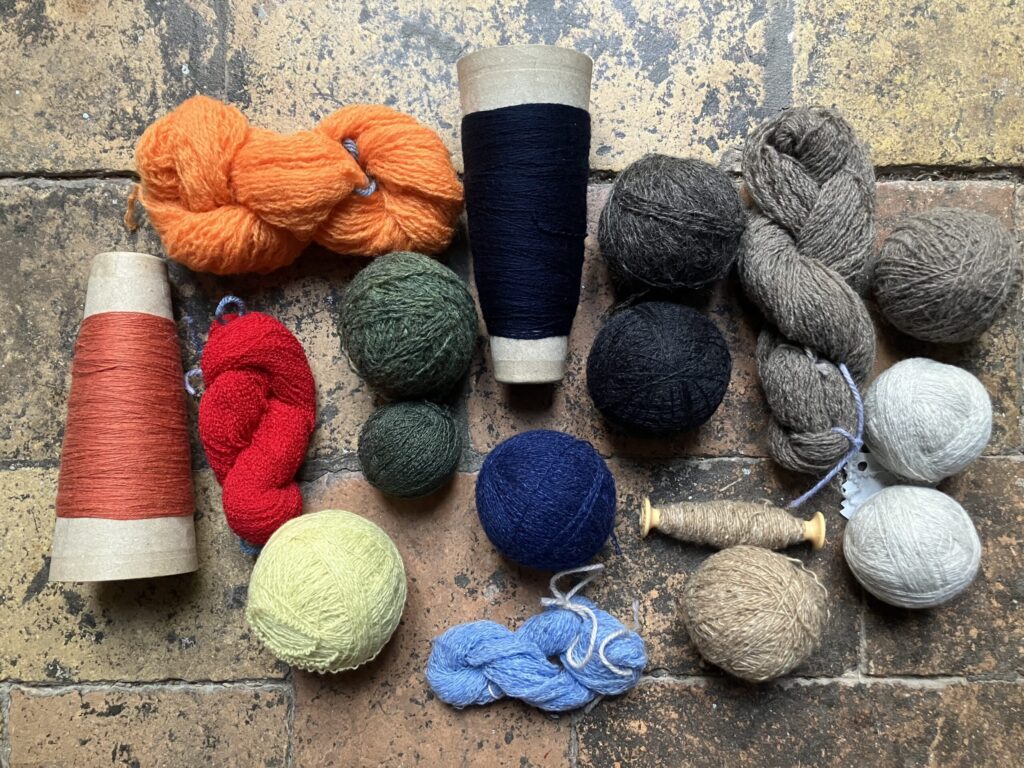
Rewound yarns, coming from our neighborhood recycling project, supply color and pattern in the textiles. With zero water use, pollution, and CO2 footprint, they are the heart of my practice. The rewounds challenge me to continually adapt to unfamiliar yarns and unpredictable supplies.
PROCESS
The chance materials from the neighborhood recycling project determine the colors and weights of the yarns. It is then my task to determine what fabric and design might successfully be woven, employing techniques typical for four to eight harness looms and my own aesthetic sense. Identifying with the Modernists of the last century, I want the form of the design to emerge from the structural elements of the weaving process. Consequently my designs take their formal cues from the interlacing particularities of the given technique.
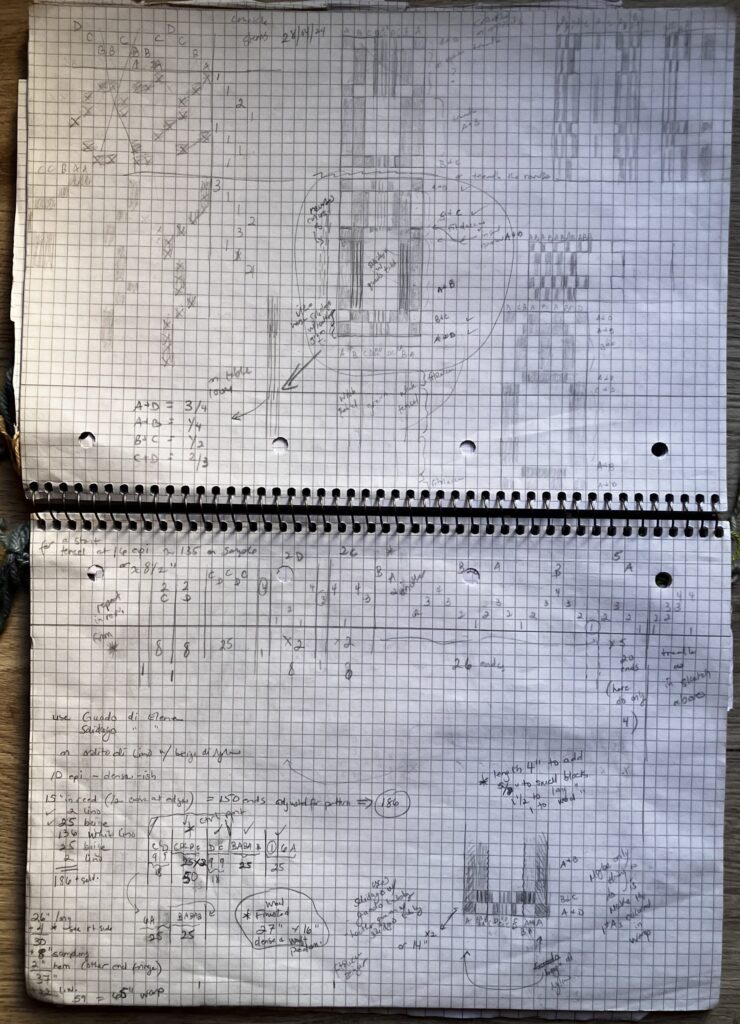
All designs are fully worked out on paper, based on my understanding of weave structures, drafting, and the abstract complexities of interlacing threads on a loom. Nothing is computer generated or made with the aid of weaving software.
Projects
Currently a series entitled CopyNon-copy occupies me. The third in the series is presently on display in Palazzo Mauri, Spoleto. It is part of an exhibition curated by the artist Franco Troiani.